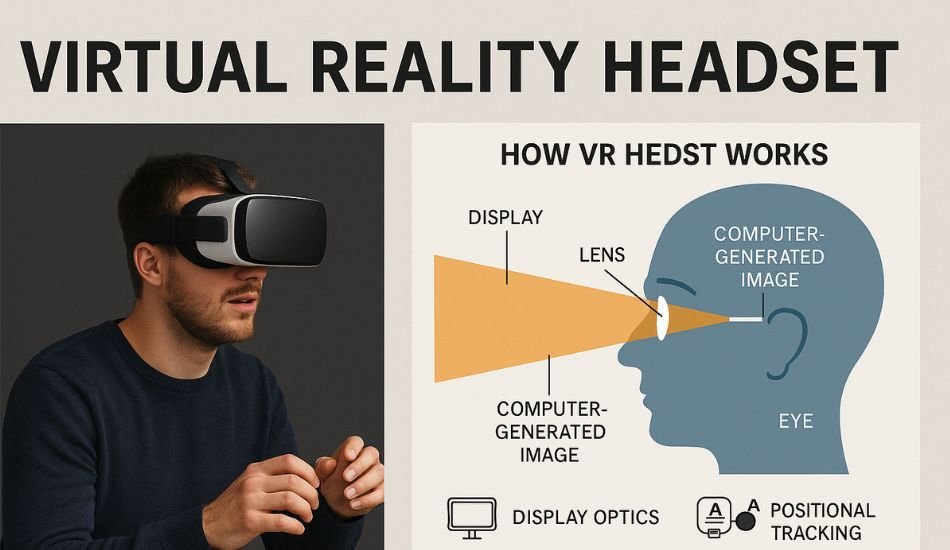
A virtual reality headset is more than just a gadget; it represents one of the most transformative technological leaps of the 21st century. What began as an experimental visualization tool for researchers has evolved into a mainstream device used in entertainment, healthcare, education, business, military training, and beyond. VR headsets have fundamentally redefined how humans experience digital environments by enabling immersive, three-dimensional virtual spaces that we can see, hear, and interact with in real time.
The global adoption of VR headsets continues to accelerate, driven by improvements in display resolution, spatial tracking, artificial intelligence, and standalone device performance. As virtual reality grows closer to the dream of full-scale immersion, understanding the technology behind VR headsets—and the opportunities and challenges they bring—is essential for anyone interested in the future of digital experiences.
This article provides a deep dive into everything you need to know about virtual reality headsets: their history, how they work, their applications, benefits, drawbacks, and the rapidly expanding market shaping the next generation of immersive tech.
What Is a Virtual Reality Headset?
A virtual reality headset, often called a VR headset or HMD (Head-Mounted Display), is a wearable device that places screens and lenses directly in front of the user’s eyes, creating the illusion of a fully immersive 3D environment. Unlike traditional computer or mobile screens, a VR headset blocks out the physical world, replacing it with a digital environment that a user can explore naturally by moving their head, body, or hands.
VR headsets typically include:
- Display screens (often high-resolution OLED or LCD)
- Lenses for stereoscopic depth
- Gyroscopes & motion sensors for orientation tracking
- Cameras or external sensors for positional tracking
- Built-in speakers or audio systems for spatial sound
- Controllers or hand-tracking systems for interaction
High-end VR headsets combine these features to create a sense of “presence”—the psychological effect of feeling physically located inside a virtual space rather than observing it through a screen.
Types of Virtual Reality Headsets
VR headsets come in three main categories:
1. Tethered VR Headsets
These require connection to a PC or gaming console. They offer high performance and detailed graphics.
Examples:
- Valve Index
- PlayStation VR 2
- HTC Vive Pro
Pros: best visual quality, precise tracking, access to large software libraries
Cons: expensive; mobility limited by cables
2. Standalone VR Headsets
These devices operate independently without a PC or console.
Examples:
- Meta Quest 2 / Quest 3
- Pico 4
Pros: wireless, portable, simple setup
Cons: less powerful than high-end PC-tethered systems
3. Smartphone-Based VR Headsets
Users insert their smartphones into a shell device (now mostly obsolete).
Examples:
- Google Cardboard
- Samsung Gear VR
Pros: inexpensive
Cons: limited performance; low immersion
As VR becomes more advanced, the industry steadily moves toward lightweight, standalone, mixed-reality hybrid headsets, blending VR and AR capabilities.
How Do VR Headsets Work? A Look Inside the Technology
Understanding the science behind virtual reality headsets reveals why they feel so immersive.
1. Stereoscopic Vision
VR headsets show slightly different images to each eye. The brain merges these two images into a 3D representation of space.
2. Motion Tracking
Tracking systems detect:
- Head rotation (looking left, right, up, down)
- Head position (leaning, walking, crouching)
- Hand movement (using controllers or optical hand-tracking)
This allows the virtual world to update instantly as the user moves.
3. High Refresh Rate & Low Latency
The faster the display refreshes and the quicker it reacts to movement, the smoother the VR experience. Ideal specs include:
- 90–120 Hz refresh rate
- < 20 ms latency
Higher values reduce motion sickness.
4. Spatial Audio
3D audio enhances immersion by projecting sound from real-world directions relative to the user’s position.
5. Haptic Feedback
Advanced VR systems include vibration or tactile responses through controllers or suits, increasing realism.
History & Evolution of VR Headsets
VR may seem futuristic, but the concept dates back more than a century.
Early Foundations
- 1838: Stereoscopes created the first 3D visual illusion.
- 1968: Ivan Sutherland designed the first true head-mounted display, the “Sword of Damocles.”
Commercial Momentum
- 1990s: Sega VR and Nintendo Virtual Boy attempted early consumer VR but failed due to technological limitations.
- 2012: Oculus Rift kickstarted the modern VR revolution after a wildly successful Kickstarter campaign.
Modern Era
Today’s VR headsets offer:
- 4K displays
- Advanced tracking
- Wireless functionality
- Integrated processors
- Mixed-reality passthrough cameras
With leading companies—Meta, Sony, HTC, Apple, and Valve—investing heavily, VR is positioned to shape the future of digital interaction.
Applications of Virtual Reality Headsets
VR is no longer limited to gaming; its impact is seen across dozens of industries.
1. Gaming & Entertainment
Gaming remains the most popular VR use-case. Immersive storytelling, interactive environments, and realistic simulations elevate gaming experiences beyond traditional screens.
VR gaming benefits include:
- Full body interaction
- 360-degree environments
- Realistic hand and object manipulation
Entertainment also includes VR films, immersive concerts, virtual tourism, and theme-park VR attractions.
2. Education & Training
VR is revolutionizing learning by allowing students to visualize and interact with subjects that were previously abstract or inaccessible.
Examples:
- Medical students performing simulated surgeries
- Engineering trainees assembling virtual machines
- History students exploring ancient civilizations
Corporate training uses VR for:
- Workplace safety
- Leadership development
- Customer-service simulations
VR allows risk-free learning with repeatable, measurable outcomes.
3. Healthcare & Therapy
Healthcare is one of the fastest-growing VR sectors.
Medical Uses:
- Surgical planning
- Doctor and nurse training
- Anatomy visualization
- Pain distraction during procedures
Mental Health Uses:
- Phobia treatment via controlled exposure
- Stress and anxiety reduction
- PTSD therapy
- Meditation environments
Studies show VR therapy can significantly reduce patient discomfort and improve treatment outcomes.
4. Business & Industrial Applications
VR is becoming essential for many industries, especially those requiring design, visualization, or remote collaboration.
Applications include:
- Architecture and interior design walkthroughs
- Virtual product prototyping
- Remote VR meetings and virtual workspaces
- Manufacturing and robotics training
- Industrial safety simulations
Companies that adopt VR often reduce development costs and improve decision-making accuracy.
5. Military & Defense
VR helps militaries safely train soldiers in:
- Combat simulations
- Strategy planning
- Vehicle operation
- Flight training
It provides realistic, repeatable scenarios without the risks and costs of live drills.
6. Sports & Fitness
VR fitness apps now compete with traditional workouts.
Benefits:
- Interactive exercise routines
- VR boxing and rhythm games
- Real-time performance tracking
Athletes also use VR for skills training and match analysis.
7. Social & Collaborative Virtual Worlds
With the rise of the metaverse, VR headsets are gateways to digital social spaces.
Users can:
- Attend virtual events
- Meet friends in VR worlds
- Participate in remote collaboration
- Build virtual identities
The merging of VR, AR, spatial computing, and AI promises deeper, more interactive digital societies.
Benefits of Virtual Reality Headsets
1. Immersion & Presence
VR offers an unmatched sense of “being inside” digital environments.
2. Risk-Free Training
High-risk fields—from aviation to healthcare—benefit from safe virtual simulations.
3. Enhanced Learning & Memory
Immersive experiences improve information retention and engagement.
4. Accessibility in Healthcare
VR therapy supports people with mental health challenges or limited mobility.
5. Expanding Creative Possibilities
Artists, designers, engineers, and developers can create and interact with 3D content in entirely new ways.
Drawbacks & Challenges of VR Headsets
1. High Cost
High-end VR systems can be expensive, especially when paired with a gaming PC.
2. Health Concerns
Common issues include:
- Motion sickness
- Eye strain
- Headache
- Dizziness
These usually occur when refresh rates are low or latency is high.
3. Limited Physical Space
Users must clear play areas to avoid collisions or injury.
4. Heavy Hardware
Some headsets still feel bulky, reducing comfort for long sessions.
5. Content Gaps
While improving, VR libraries still lack depth compared to traditional platforms.
6. Social Isolation
Extended immersion may reduce real-world interaction for some users.
Market Growth & Future Trends
The VR headset market is experiencing explosive growth.
Current Market
- Global VR market valued around $16–20 billion in 2024.
- Growth projected to exceed $120 billion by 2032.
- Standalone VR headsets are leading adoption due to lower cost and ease of use.
Future Trends
- Mixed-Reality Headsets blending VR and AR features.
- Lighter, more ergonomic designs using pancake lenses.
- AI-powered virtual environments that adapt to user behavior.
- Improved accessibility for education and enterprise users.
- Higher resolution and wider field of view for hyper-realistic simulation.
- VR in remote work and collaboration, driven by virtual offices and immersive communication tools.
- Integration with haptic suits and gloves, enhancing full-body immersion.
The future of VR headsets is not just about entertainment—it is about reshaping how humans work, learn, create, heal, and connect.
Conclusion
The rise of virtual reality headsets marks a defining moment in digital evolution. These devices enable us to step into new worlds—whether for entertainment, education, healthcare, business, or social connection. Their immersive capabilities are transforming industries, making training safer, learning more engaging, therapy more accessible, and creativity more limitless.
Although challenges such as cost, comfort, and health concerns remain, the rapid pace of innovation suggests that VR headsets will continue to evolve into lighter, smarter, more powerful tools. As the world moves toward spatial computing and mixed reality, VR will become an integral part of daily life—blurring the line between the physical and digital realms.
For more insightful and technology-focused articles, be sure to visit Infory, where we explore emerging innovations shaping the future.